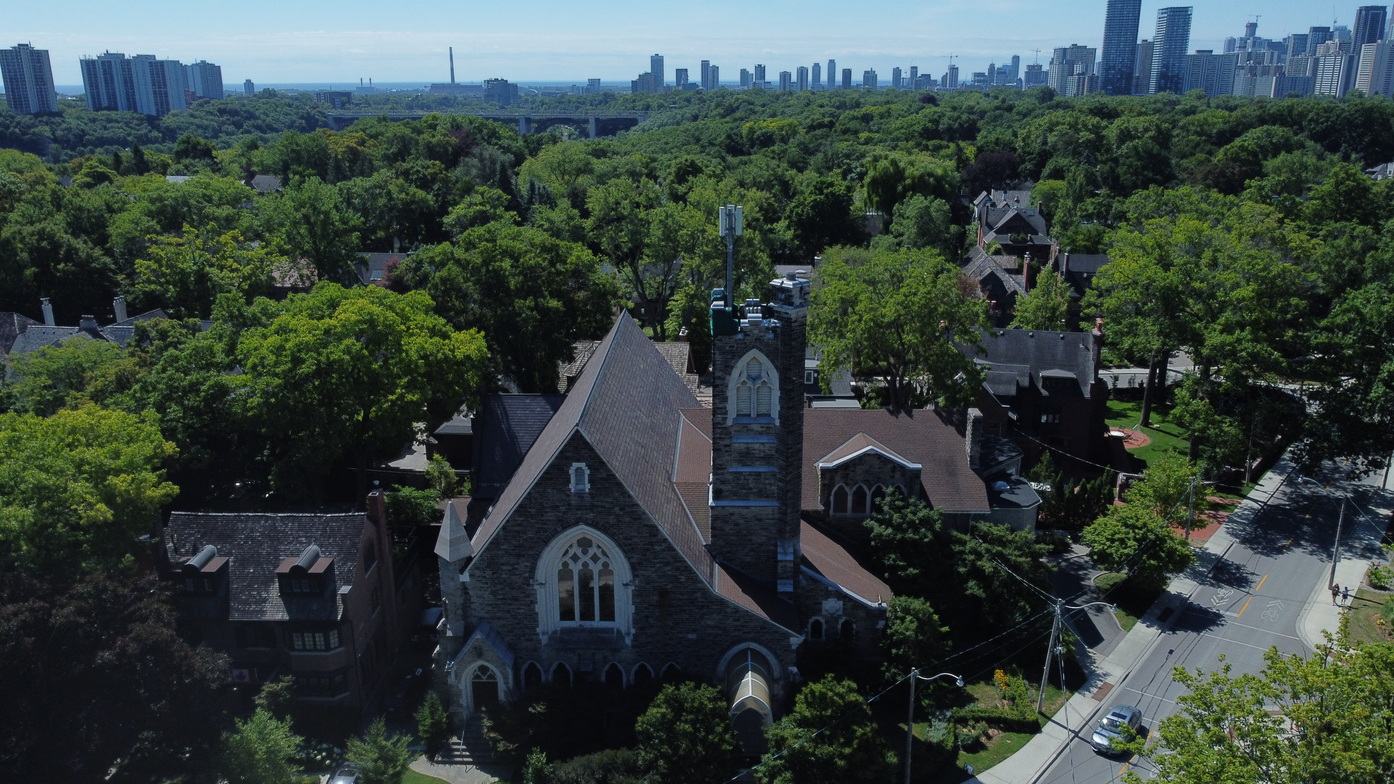
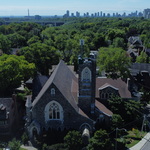
Construction of Rosedale United Church, originally known as the Northern Congregational Church until 1925, was completed in 1913. Situated at the corner of 159 Roxborough Drive and Glen Road, the church was designed by architect John Gemmell in the Gothic Revival style.
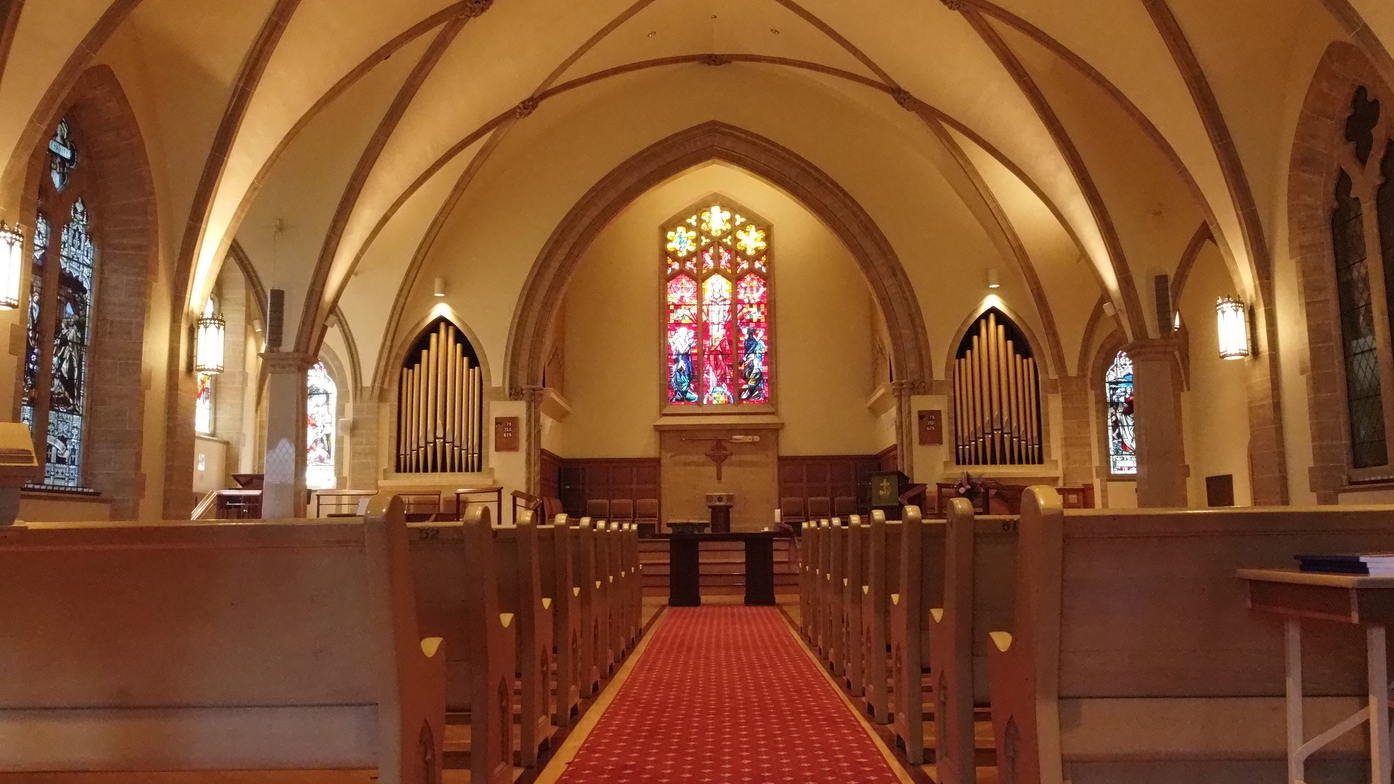
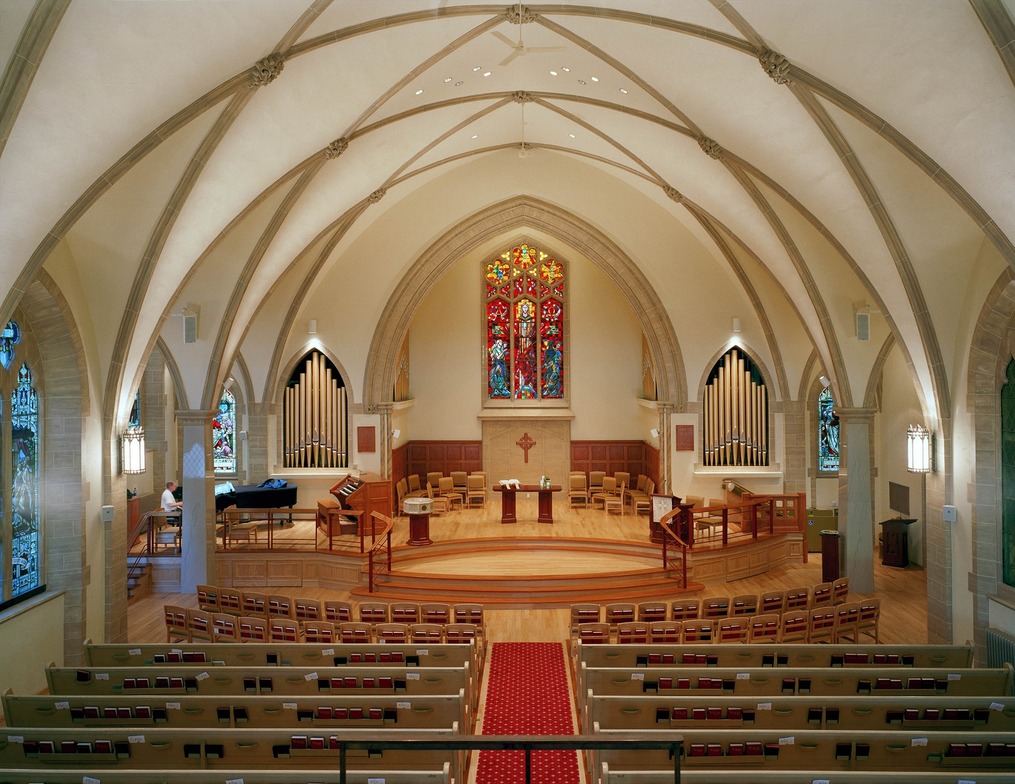
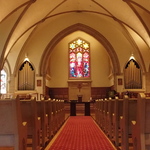
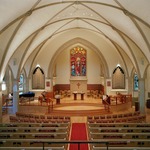
The architecture embodies the dramatic verticality and intricate detailing characteristic of this architectural tradition. Inside the sanctuary, its pointed arches and vaulted ceilings draw the eye upward, creating a sense of height and grandeur. The tall, pitched roof and elegant sanctuary arches emphasize the church's verticality and the vibrant stained glass windows fill the space with colourful, ethereal light, enhancing its spiritual atmosphere. Together, these features make the Rosedale United Church an impressive example of Gothic Revival architecture.
The Gothic Revival sanctuary also showcases architectural wisdom that enhances the acoustics, allowing the Canadian-designed and manufactured Casavant Opus 591 pipe organ to emit rich, resonant tones that fill the space with a majestic and immersive sound. Built in 1914, the organ underwent revisions and additions in 2005, including a new console. Today, the organ boasts 35 stops and 44 ranks, for a total of 2,637 pipes.
In addition to the sanctuary, the building offers three levels of community space, fully accessible by a lift. The spaces are not only used by the church’s congregation, but under the secular brand of The Rosedale Centre, the community has access to music, arts and wellness programs, reception rooms for family events, an art gallery that features local artists, and a recycled book room that supports community outreach initiatives.
Originally purchased in 1914, our organ has filled the sanctuary with music for more than a century. Upgraded in 2003 to enhance its power and versatility, this mighty instrument now boasts 2,637 pipes, each producing a single pitch—ranging in length from 16 feet to just 2 inches. Larger pipes create the deep, resonant tones, while the smaller ones bring bright, higher sounds, together forming a breathtaking range of voices. The 3-manual console, or three keyboards, gives the organist immense control and flexibility, unlocking infinite musical possibilities. Crafted with character, the pipes are grouped into families and built from both wood and metal, producing unique timbres and textures. Using electro-pneumatic action, electrical signals trigger airflow that brings each pipe to life, blending art, science, and sound in remarkable harmony.
What the eye doesn’t see is just as impressive as what the ear hears. Beyond the console and pipes lies a hidden network of wind blowers, handmade leather seals, wooden wind chests, electric wiring, digital controls, internal switches, and the pedalboard. Maintaining this intricate system requires extraordinary skill: each of the 2,600+ pipes must be individually adjusted by expert tuners, trained in rare apprenticeships that combine woodworking, leather care, windline maintenance, electronics, and the fine art of voicing. Pitch is influenced by temperature, material, and design, and the organist works closely with tuners to monitor and correct variations. Today, only a handful of these master craftsmen remain in Canada. Built by Casavant Frères—Canada’s legendary organ builders, celebrated even in a Canadian Heritage Moment—this instrument is both a national treasure and a globally recognized masterpiece, part of a legacy of world-class organs found in prestigious venues across the globe.
Located at the corner of Glen Road and Roxborough Drive, our pollinator garden is a vibrant sanctuary where nature flourishes throughout the growing season. Thoughtfully planted with a diverse collection of native and pollinator-friendly perennials, it provides nectar and pollen for bees, butterflies, hummingbirds, and other beneficial insects while bringing beauty, colour, and life to the church grounds.
The garden features coneflowers, sages, black-eyed Susans, hydrangeas, ornamental grasses, Japanese maples, boxwoods, and ivies, creating a landscape that changes with the seasons while supporting local wildlife.
Throughout the garden, commemorative plaques honour members and friends whose lives and service have enriched the Rosedale community. The Rev. Barry L. Brooks, who served on the ministerial staff for nearly three decades, baptized, married, and celebrated the lives of generations of the Rosedale congregation. Bill and Ruth Storey were remembered for their generosity, hospitality, and deep care for others. Dr. Gary and Nora Ashby devoted many years to the life of Rosedale, with Gary contributing to the congregation, choir, and wider church community. John Rothwell is remembered for his enthusiasm, generosity, and longstanding connection to the church. Additional plaques commemorate the Tweel family and L. Earl Miller, preserving an important part of the garden's history and those remembered here.
“For as the days of a tree, so shall be the days of my people.”
Isaiah 65:22
Created to celebrate Rosedale United Church's centennial in 2013, this contemporary stained-glass window was made possible through the generosity of the congregation, which raised $300,000 for its creation. Designed by Canadian artist Sarah Hall and fabricated in Germany, the artwork transforms with the light—revealing different imagery when viewed from inside the sanctuary and from outside the church. Rooted in the biblical image of the Tree of Life, it symbolizes growth, renewal, and the enduring faith of the Rosedale community.
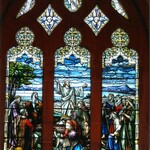
Donated by Emma Joselin in loving memory of her husband, Charles Joselin, this window depicts the three Marys arriving at Christ's tomb on Easter morning. As the angel proclaims, "He is not here; He is risen," the scene captures one of Christianity's central moments of hope and resurrection. The design is based on a painting by the German artist Heinrich Hofmann.
This window, depicting Saint Christopher, the patron saint of travellers, was donated in 2002 by the descendants of John Gowans Kent (1861 - 1927). Its journey mirrors that of the saint it portrays: originally installed at Old St. Andrew's Anglican Church on Jarvis Street, it later moved to St. Andrew's on Bloor Street before finding its permanent home at Rosedale United Church. John Kent was a prominent Toronto businessman, community leader, and longtime resident of nearby Glen Road.
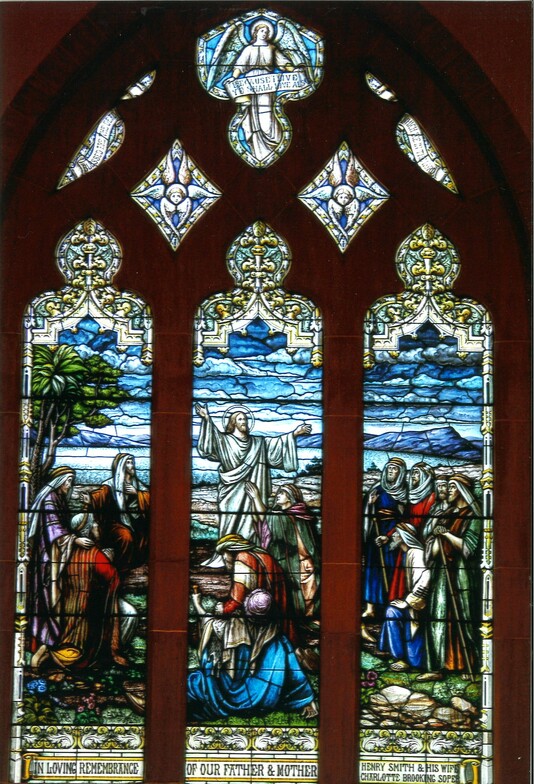
This window honours James Avon Smith (1831 - 1918), an Honorary Deacon of the Congregational Church and a founding partner of the architectural firm Smith & Gemmell, which designed Rosedale United Church. Installed by his daughter, Amy, it commemorates both Smith's faithful service to the congregation and the vision that helped shape the church building that continues to serve the community today.
Depicting Christ in the Temple disputing with the doctors, this window was donated by the daughters of Henry James (1823 -) and Harriet Clark (1825 -). The Clark family played an important role in Canada's publishing history through the firm that would become Copp Clark, one of the country's oldest publishing companies. Their gift reflects both their family's legacy and their lasting connection to the congregation.
Commanding the south wall of the sanctuary, this striking window was commissioned by Clare F. Wood (1904 - 1999), president of the Hobbs Glass Company. Designed by Toronto architect Earle Sheppard (1894 - 1957) and French artist André Rault (1912- 1997), it was handcrafted in France using traditional cathedral techniques before being shipped to Canada. Bathed in natural light, the window celebrates Christ as the source of light, hope, and blessing for all people.
Inspired by the words of Luke 18:16, this window was donated in memory of William Walter (1826 - 1894) and Caroline Anne Copp (1833 - 1883) by their children. Fittingly, the family chose a scene of Christ welcoming children, as Caroline was the mother of fifteen children. Based on a painting by Heinrich Hofmann, the window reflects Christ's message of love, welcome, and belonging while honouring a family whose publishing company, Copp Clark, became one of Canada's oldest and most respected publishers.
This window commemorates Henry O'Hara (1833 - 1918), a Toronto banker and dedicated member of the congregation whose leadership helped guide the construction of Rosedale United Church. O'Hara had the honour of turning the first sod for the new church in 1913, marking the beginning of a new chapter in the congregation's history.
Construction of Rosedale United Church began in 1913 on the corner of Glen Road and Roxborough Drive, with the first sod turned by Henry O'Hara. Within a year, the congregation had moved from its former Church Street home into this new Gothic Revival sanctuary, despite the outbreak of the First World War. Through remarkable generosity, members raised the funds to purchase the land, construct the church, furnish the sanctuary, install the renowned Casavant organ, and commission memorial stained-glass windows that continue to inspire worshippers today. Since becoming Rosedale United Church in 1925, the congregation has remained an active and welcoming community of faith.
Rosedale United is a proud participant of Doors Open Toronto!
Each year, over 150 buildings and sites open their doors for Doors Open Toronto, a city-wide celebration of architecture, design and urban space. The City of Toronto is excited to work with the community to showcase their sites to residents and visitors.
Come visit us to see the marvel of our building in-person!
Come Inside!
Step inside our Gothic Revival sanctuary and you’ll feel its dramatic beauty. Towering arches, a tall pitched roof, and luminous stained-glass windows create a sacred atmosphere. At the heart of the space is our Casavant Opus 591 pipe organ, first built in 1914 and expanded in 2005, with more than 2,600 pipes filling the sanctuary with resonant sound. Every detail invites both reverence and wonder.